
Explore AI for benefits resources

Featured content

Case Study
How Samsung’s benefits team became AI-native
Challenge
A benefits program running on disconnected data
Samsung Semiconductor’s benefits team was running a multi-million-dollar program, but their data couldn’t tell them whether it was working the way they intended, or help them shape strategy and make the case for change to leadership. Claims, Rx, dental, vision, point solution, and wellness data all arrived directly from vendors, each source on its own, never reconciled, leaving the team no way to reason across them.
The pressure came to a head at renewal. Samsung’s point solution contracts were all up at once, and the performance guarantees underneath them rested on each vendor’s own anticipated ROI, quantified largely from employee attestations rather than objective data. Sarah Schutzberger, Samsung Semiconductor’s Benefits and Wellness Sr. Manager, who is responsible for the entire program, wanted to stop relying on fragmented information and tie every point solution back to actual claims. At the same time, with the team scaling for growth and employees increasingly expecting AI-grade speed, she wanted to modernize the employee experience too.
“Everything before Ava was fragmented. We relied a lot on the data being provided directly to us from our vendors. Now we’re able to connect the dots between each of our benefits to truly understand the employee impact.”

Sarah Schutzberger
Benefits and HR Operations Sr Manager, Samsung
Solution
Two agents, one connected platform
Samsung Semiconductor deployed Avante’s AI-native benefits intelligence platform. It securely brings together claims and eligibility, point solution data, plan documents, and the vendor contracts behind them into the Vault, and two purpose-built AI agents sit on top of that shared foundation. For most benefits teams, those sources never connect. With Avante, they do.
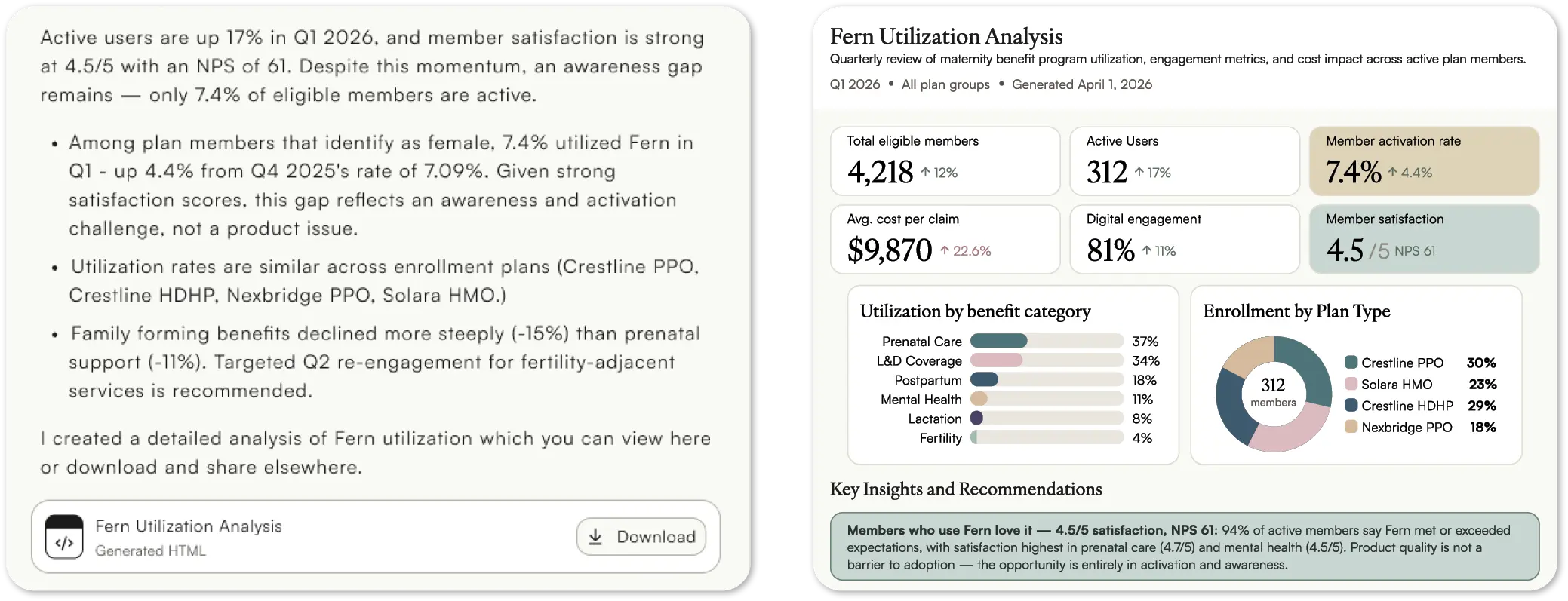
Ava
Ava, the agent for the benefits team, reasons over all of it, reconciling vendor contracts and reports against the actual claims on demand. It can generate reports and build branded presentations. The team can bring its own data too, uploading spreadsheets, PDFs, and files into a conversation. It acts like an expert benefits teammate that knows the company, its programs, and its goals, and delivers objective, near real-time insights when they’re needed. “I was looking for a data warehouse,” said Sarah, “and this is so much better. Instead of static dashboards or sending requests to an analyst, I have real-time insights at my fingertips on any question I have.”
Screens are illustrative. Names and data shown are fictional to protect user privacy.
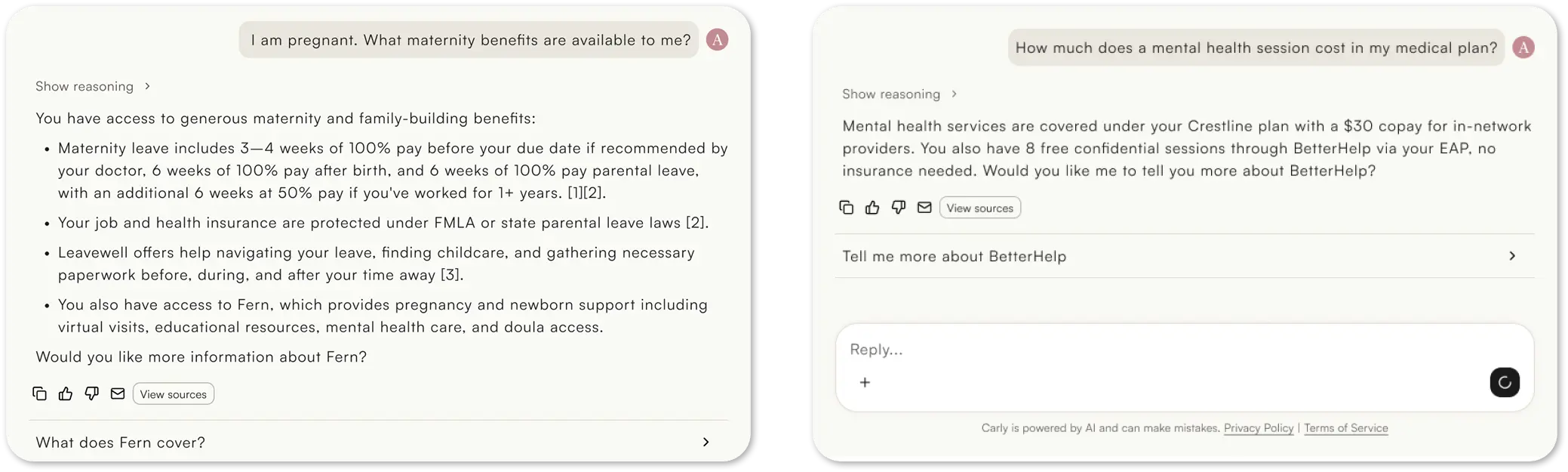
Carly
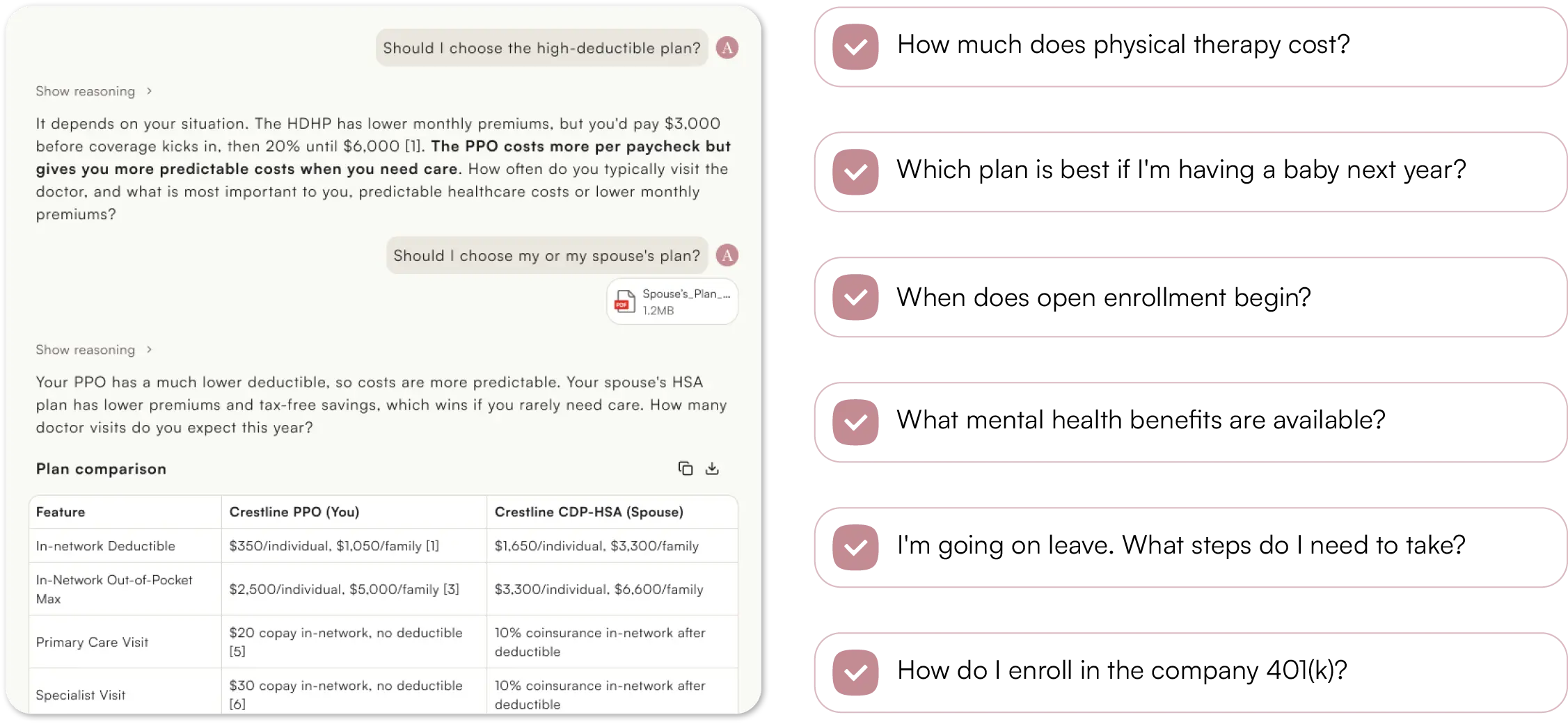
Carly, the agent for employees, gives Samsung’s workforce real-time, accurate answers to benefits questions, and prompts the right next step rather than answering only the literal question. It helps employees find and use benefits they did not even know they had, at the exact moments they need them most.
Screens are illustrative. Names and data shown are fictional to protect user privacy.
Together, the two agents give the entire company a complete picture of its own benefits, making the use cases below possible for the first time.
Results
What the team does with Ava
The use cases are virtually endless, from building reports to making the case for new programs, from developing customized communications to pressure-testing plan redesign decisions. These are just a few the team acted on in its first three months with Ava.
Use case 1: 66% increase in Lyra utilization
Lyra had traction, with strong engagement and a high share of employees in care relative to its book of business. But when the team dug into behavioral health using Ava, they were able to compare utilization across Lyra and the medical plan, the EAP and the carrier, two datasets that almost never get connected. They surfaced a gap they could not have seen before: a large share of dependents, especially children, were routing through the medical plan for behavioral health instead of starting with Lyra, where the team wants people to begin. The stakes are meaningful: care comes in on day one through Lyra, versus waits of two weeks or more through the medical plan.
The team used Ava to draft communications for that exact parent-and-dependent population, timed to Mental Health Awareness Month, and sent them that week. They also took the finding back to Lyra so it could sharpen its own outreach, and opened a conversation with the medical plan provider about surfacing Lyra first inside the portal. The result: from the first communications in May through the end of June, engagement with the dependent population improved and utilization increased 66%.
“It was a ten-minute chat with Ava that gave us key insights, so we could make targeted communications and address the exact gap instead of throwing spaghetti at the wall and sending out marketing materials that weren’t necessarily hitting.”
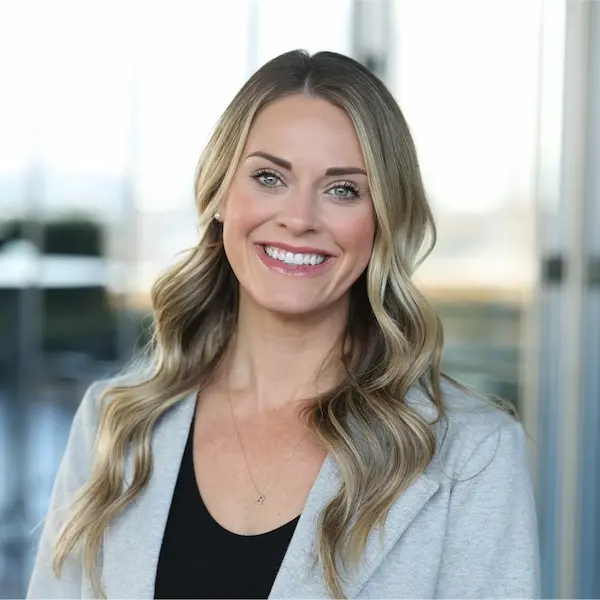
Cara Ayala, RD, CPT, CHC
Wellness and Benefits, Associate Manager, Samsung
Use case 2: Making the case for healthier food options
As dietitians, Sarah and Cara had wanted to address nutrition through the company café for years, and the project kept getting pushed aside. Working from the claims data, they pulled the disease states most influenced by nutrition, gave Ava their clinical guidance (whole-foods-first, plant-forward, lean proteins, healthy fats, and a simple green/yellow/red system employees could follow), and used Ava to produce an evidence-based meal program.
The café team now plans to use this framework during the current RFP process to ensure the new vendor is able to execute successfully. Additionally, the team will track the changes in their food program along with medical claims to see the impact. A project that had waited years came together in a single 2-hour planning session.
“Revamping our cafe and food options has been a passion project of ours, but it’s a project that gets pushed to the wayside year after year. But with Ava, it is now possible to move forward.”
Cara Ayala, RD, CPT, CHC
Wellness and Benefits, Associate Manager, Samsung
Use case 3: Building an airtight sabbatical program ROI proposal
Hortencia Alcazar, the Senior Benefits Analyst at Samsung Semiconductor, had built a sabbatical analysis by hand about two years ago. It took two to three weeks of research, formatting, and modeling. She rebuilt it this year with Ava, and it came together in a few hours. Ava pulled in turnover, mental health burnout claims, replacement cost, and tenure assumptions to model ROI at different vesting points, then packaged the work as an executive summary and slides ready for leadership. What stuck with Hortencia and the team was that when they tried to trick it with the data, it held its logic and double-checked them, reasoning exactly as they would have. The proposal is now slated for Samsung’s 2027 program.
“I’d classify Ava as a thought partner and an analyzer.”

Hortencia Alcazar
Senior Benefits Analyst, Samsung
Endless possibilities for AI-native teams
In addition to the use cases above, the team:
- Built a custom manager support guide for mental health crises in minutes by combining Samsung’s own mental health crisis-response document with materials from Lyra
- Assessed whether their preventative care solution was reducing cardiovascular disease and diabetes and found low engagement among comorbid members who need it most, driving targeted communications
- Explored redesigning the medical plan for next year, including options such as a migration from the OAP to an HDHP, which will inform future negotiations
- and more…
Results
What Carly does for employees
Before Carly, an employee who wrote to the shared service center could wait more than 48 hours for a reply, and often got an answer to only the exact question they had asked. Carly answers in real time, meeting the employee where they are with personalized guidance. 16% of questions come in after hours, when the benefits team isn’t available, meeting an employee at the exact moment they need support.
It also prompts the right next step. For example, when an employee asks about mental health coverage under the medical plan, Carly also points them to Lyra, the path the team wants people to take first. Every employee question becomes a chance to drive awareness of the benefit they should be using, at the moment they need it. In the last four months alone (February – May), Carly instantly and accurately answered over 1,500 employee questions, saving the benefits team approximately 930 hours.
Open enrollment, when question volume is highest, was a key point in the year to prove Carly’s efficacy and impact. According to Sarah Schutzberger, “It was the smoothest open enrollment we’ve ever had. The amount of time it saved our team was extraordinary.”
“Avante is transforming our employees’ experience, is giving our benefits team time back, and has yielded insights resulting in impactful interventions, which are having a positive impact on the health and wellbeing of our team.”

Kevin O’Connell
Senior Director, Total Rewards & HR Operations, Samsung
Screens are illustrative. Names and data shown are fictional to protect user privacy.
How the work itself changed
With Carly fielding the day-to-day employee questions, the team reclaimed the hours it once lost to repetitive inbox support and redirected them to strategy and program development.
The team spends that reclaimed time with Ava, now its first stop for any question, communication, or decision. They use Ava to answer real-time questions in a standing Friday meeting with leadership and bring it to events to pressure-test ideas on the spot.
Ava gives them more strategic insight, faster, and it’s backed by data they trust. In its first few months, the team reclaimed hundreds of hours using Ava to build leadership and employee-facing deliverables and run dozens of cross-source claims analyses that used to take weeks by hand, or days waiting on vendors. That level of visibility and ownership also changes what gets approved. Walking into leadership with the data and the reasoning behind a recommendation moves more initiatives forward, and gives the team the confidence to put program and plan redesign recommendations on the table.
“It’s easier to push things through leadership when you have the data and the why behind the strategy.”
Sarah Schutzberger
Benefits and HR Operations Sr Manager, Samsung
“I don’t know what I did before Ava.”
Cara Ayala, RD, CPT, CHC
Wellness and Benefits, Associate Manager, Samsung
Look ahead
For Samsung, these are the early innings. On the roadmap: bringing their own drug-utilization data to PBM negotiations; connecting LOA, short-term disability, Lyra, and medical claims to forecast and prevent leaves; and next year’s medical plan design.
Benefits clarity for employees and HR
Samsung Semiconductor runs a generous benefits program, including several point solutions, focused on emotional, social, financial, and physical health and wellness for their employees and dependents.
“If you don’t have AI on your benefits team, you’re already behind. Especially in our industry, our employees are so used to using AI in everything they do, from coding to drafting. It’s everywhere. If we don’t have it, how can we stay aligned with the technology and the experience they’re already used to?”
Let’s find the right resource for you
Guide
Avante Solution Brief
Avante is helping HR leaders transform benefits confusion into clarity. Find out how its dual-agent benefits intelligence platform works and why leaders trust Avante for benefits navigation and intelligence at scale.
What's inside:
- The four forces breaking benefits programs today — and why legacy approaches can't keep up
- How Carly and Ava work together to serve employees and HR teams simultaneously
- Real deployment results: 97% of benefits inquiries resolved, 3x lower HR ticket volume, 93% employee satisfaction
- The deployment path from Day 1 to fully autonomous — in weeks, not months
- Why accuracy, safety, and zero hallucination tolerance aren't optional in benefits AI
Rolling out benefits navigation AI? Here are 5 things you should know to ensure adoption
Test it with your biggest skeptics
Every HR team has at least one person who's deeply skeptical of AI. They've been doing this work for years, they know the edge cases, and they're convinced the AI will get something wrong. That person should be your first tester.
One HR leader we worked with did everything she could to stump the system. She tested obscure plan provisions, asked questions designed to trigger hallucinations, and tried to get the AI to say something it shouldn't. Over the course of two weeks, she went from the loudest critic to the strongest advocate. She realized the AI was giving answers that were not just accurate but more thorough and consistent than what employees were getting through other channels.
If your skeptic is convinced, trust and advocacy follow. If they find problems, you can correct them early on. Either outcome is a win.
Start with your benefits inbox
The most successful rollouts meet benefits teams where they already are: their inbox. Integrate the AI directly into your HR or benefits inbox or ticketing system so it drafts responses to incoming questions on your behalf, which you then review and send.
This approach lets every benefits manager on the team build trust in the AI through direct observation. They see the quality of responses. They gain confidence that this tool actually understands their plans. Meanwhile, the team gets immediate value: fewer hours spent on repetitive questions and faster response times.
Think of it as the “crawl” stage. It works because it removes risk while delivering results from day one.
Meet employees where they already are
Your employees don't need another app or another login. They need benefits guidance in the workflows they're already using: Slack, Teams, ServiceNow, your benefits portal, or your enterprise AI (e.g. Claude, Gemini, etc).
The rollouts that drive the highest utilization embed benefits AI into the places people already go with questions, so employees get accurate answers without changing their behavior.
One tip to accelerate adoption: when employees come to your team with a question the AI can handle, redirect them. This helps them build a familiarity with the AI, learn to trust it, and, within weeks, their habits will shift and they’ll start to go to AI first.
Make personalization employee-led and opt‑in
Personalization is a compelling reason to use AI for benefits guidance. The AI can tailor responses to an individual's situation and priorities, guiding employees to the right benefits at the right moment.
There are two options for personalization, and successful rollouts typically start with the first one:
- Authenticated, but not integrated (we informally call this "Dory Mode"): Employees sign in via SSO so the AI can remember prior conversations and the preferences they've shared. Employees ask a question, share whatever context they want, and get a clear, tailored answer. No HR data is pulled in; the personalization comes entirely from what the employee has chosen to tell it over time.
- HRIS-integrated: Connect your HR system so the AI knows the employee's location, age, tenure, plan elections, and dependents. Answers are personalized without the employee needing to volunteer that information, and the system can proactively surface what's most relevant to them.
Always make any level of personalization opt-in. One major tech company learned this the hard way when it required employees to share personal data with an AI benefits tool or lose access to their health plans. The backlash was immediate and severe, with employees calling the policy "coercive." The company reversed course within days. Consent tied to essential services isn't actually consent. Let employees choose to share more when they're ready, and they often will.
Roll out 2-3 months before open enrollment, not during it

It's tempting to launch benefits AI during open enrollment. That's when question volume spikes, benefits managers get the Sunday Scaries, and the inbox becomes unmanageable.
But open enrollment is the worst time to introduce a new AI assistant for benefits. Employees are overwhelmed with communications and deadlines. When they're down to the wire on plan elections, they turn to the resources they already trust: your team.
Instead, launch in a quieter period. Give employees time to discover the AI, ask low-stakes questions, and build confidence that it's a reliable resource. Then when open enrollment hits, they already know where to go. One VP of Total Rewards we work with took exactly this approach. By rolling out months before OE, her team saw 60% utilization and saved 4,500 hours in the first year alone.
Making it real
Of course, none of this works if the technology isn't up to the job. Many of the steps above are only possible with a platform robust enough to win over your biggest skeptics, flexible enough to integrate into the tools your teams and employees already use, and designed to let you add personalization incrementally as trust grows.
That's why we built Avante the way we did. Not just to be accurate and secure, but to make the rollout itself as low-friction and high-value as possible.

Why Your Benefits Team Dreads Open Enrollment (and How AI Can Help)
The reality of open enrollment today
Despite the best efforts of HR leaders, consultants, and vendors, the system is broken:
- 86% of employees are confused about their benefits (Businessolver, 2026 Benefits Insights Report)
- Thousands of questions come in during OE and can take days to resolve
- Healthcare costs are projected to rise nearly 9% in 2026, the sharpest increase in more than a decade (Business Group on Health, 2026 Employer Health Care Strategy Survey)
The result is confused employees, overworked benefits teams, and rising costs that outpace budgets.
The hidden costs of confusion
Confusion around benefits is more than a seasonal frustration. It creates ongoing costs:
- Underutilized programs: employees miss out on valuable offerings because they don't know they exist
- Avoidable claims: without guidance, employees may default to higher-cost or out-of-network care
- Lost productivity: benefits teams spend hours resolving Tier 0/1 questions instead of focusing on higher-value work
- Uncontrolled spend: leaders lack the unified data and ROI visibility to optimize investments or hold vendors accountable
Without a new approach, these challenges keep compounding, making it harder for leaders to manage costs and deliver the employee experience they want.
How AI is transforming open enrollment
AI offers a new way forward by addressing the root causes of confusion and inefficiency. Three use cases stand out for benefits leaders.
1. Automating routine questions
AI can resolve the most common inquiries instantly:
- "Which plan covers my spouse's medication?"
- "How does tuition reimbursement work here?"
- "When does my 401(k) match start?"
This frees benefits teams from repetitive Tier 0/1 workload. For more complex cases, AI can draft responses for HR review or route the issue directly to the right vendor or internal expert.
2. Surface unseen benefits
Most employees don't know everything that's available to them, especially when they're in the middle of a benefits decision. AI can recommend the right program at the right moment, in the natural flow of an employee's question.
For example, if an employee asks about the cost of a mental health visit, AI can point them to the mental health point solution that's already part of their benefits package. If someone is researching fertility options, AI can surface the fertility benefit they may not have realized was covered. This improves utilization of programs employers are already paying for and steers employees toward higher-value, lower-cost care at the moment of need.
3. Instant answers for leaders
For benefits leaders, waiting weeks for utilization or cost reports is no longer necessary. AI can answer questions in seconds:
- "Where are our biggest cost drivers?"
- "Which vendors are underperforming their SLAs?"
- "Are employees actually using the programs we are investing in?"
As Dene Sparrman, Global Head of Benefits at Zscaler, put it: "Instead of wondering if GLP-1s would impact costs, we got instant data-driven answers." These insights help leaders spot patterns, identify opportunities, and make timely, data-driven decisions.
The impact of AI in benefits
When AI is applied to open enrollment, the results show up across the function:
- 40% decrease in routine workload for benefits teams, freeing time for strategy and employee experience
- Stronger employee engagement, as benefits are finally understood and used, with 1 in 3 employees engaging with AI on average and more during key events like M&A
- Better support when employees need it, with 35% of questions answered outside of normal working hours
- Near real-time visibility for leaders, with clarity on utilization, ROI, and employee sentiment
Avante: AI trusted by benefits leaders
Avante is the first AI-native benefits intelligence platform designed from the ground up to make this vision real. The platform ingests your plan documents and data and integrates directly with your systems. From there:
- Carly, the AI benefits agent for employees, delivers personalized benefits guidance, 24/7
- Ava, the AI benefits agent for HR, provides analyst-grade reports and instant insight into costs, utilization, and vendor performance, in minutes not weeks
SurveyMonkey shows what's possible. They deployed Avante for open enrollment, saving their benefits team 369 hours in the two week period of open enrollment alone. Read the SurveyMonkey case study →
Other customers describe similar impact. Sarah Schutzberger, Benefits and Wellness Sr. Manager at Samsung Semiconductor, called her team's experience "the smoothest open enrollment we ever had. The amount of time it saved our team was extraordinary." Elizabeth Chrane, Chief People Officer at OneDigital, summed up the bigger picture: "Our teams now have the superpowers to focus on the meaningful, high-impact work that brought us to HR."
Benefits questions do not stop at open enrollment, and neither does Avante. Built for the entire employee lifecycle, Avante delivers trusted, personalized benefits guidance from onboarding to offboarding and every stage in between, covering 401(k), leave of absence, healthcare, and more. Companies are using Avante to turn benefits complexity into clarity, all year long.


The ERISA risk nobody talks about: why building benefits AI in-house could be a personal liability problem for your plan sponsor
What is ERISA, and why should teams building benefits AI care?
ERISA stands for the Employee Retirement Income Security Act. It's a federal law governing employer-sponsored benefit plans, and it establishes fiduciary duties for anyone involved in administering those plans.
Here's what catches most technical teams off guard: fiduciary status under ERISA is based on the functions you perform, not your job title or intentions. The legal term is "functional fiduciary," and it means that if you build an AI tool that exercises discretionary authority in how it interprets plan language and guides employees, the people responsible for that tool, from the plan sponsor who authorized it to the engineering leaders and administrators who deployed it, may have fiduciary obligations whether they designed it that way or not.
And fiduciary liability under ERISA is personal. It doesn't just land on the company. The plan sponsor is always the fiduciary. But the liability can also reach the individuals who operationally deploy a poorly governed AI tool without adequate expertise or oversight, whether that's a named plan administrator, a benefits committee, or the HR leaders who greenlit the project. That's personal liability, not just corporate exposure, for specific people in your organization. If you're an engineering leader evaluating this project, that should change how you think about the risk.
Why benefits AI is different from every other internal tool you've built
Most internal AI tools operate in a forgiving environment. If a chatbot gives a bad answer about your company's PTO policy, someone catches it and you push a fix. Nobody gets sued. The blast radius of a wrong answer is small and temporary.
Benefits guidance is fundamentally different.
The stakes are financial and medical. When an employee asks "which plan covers my daughter's medication?" or "how does my deductible accumulator work?", they're making real decisions about their family's healthcare and their household budget. A wrong answer can cost someone thousands of dollars or delay necessary medical care.
The scale of impact is different too. If your internal tool misreads a formulary tier or gets accumulator logic wrong during open enrollment, that error doesn't affect one employee. It can affect thousands, all making decisions based on what your tool told them.
And then there's ERISA, which changes the calculus entirely.
The "functional fiduciary" problem
The question that matters under ERISA isn't "did we intend to act as a fiduciary?" It's "did the tool exercise discretion in interpreting plan terms and providing guidance to employees?" If the answer is yes, the people who built and operate that tool may be fiduciaries in the eyes of the law.
Most engineering teams will instinctively respond: "We'd just provide information, not make decisions." I understand the impulse. But the line between informational and discretionary is far blurrier than it appears. If your AI tool takes ambiguous plan language, interprets it, and gives an employee a specific answer about what's covered, what their cost will be, or which plan is the better fit, that looks discretionary. Courts have gone both ways on where exactly the line falls, which is precisely the problem. Ambiguity here means litigation risk.
Another common response: "We'd add a disclaimer." This one worries me more, because it reveals a misunderstanding of how ERISA works. You can't waive fiduciary duties with a terms-of-service page. And adding a 'consult your plan documents' disclaimer doesn't make a “guidance tool” an “information tool” if it's functioning like one. ERISA's protections exist for plan participants, and those protections aren't something you can disclaim in a footer.
What personal fiduciary liability actually means
Under ERISA Section 409, a fiduciary who breaches their duties can be personally liable to make good any losses to the plan resulting from the breach. This isn't theoretical. ERISA litigation is common, and the Department of Labor actively investigates fiduciary breaches.
For an engineering leader, this creates an uncomfortable situation. You build an AI tool as a technical project. It starts answering benefits questions. It gets something wrong about an HSA contribution limit, or it misinterprets a plan's coordination of benefits rules, or it gives incorrect guidance about a prior authorization requirement. Employees rely on that guidance and make decisions based on it.
Now a plaintiff's attorney, or the DOL, starts asking: What benefits expertise did the team that built this have? How did you validate the accuracy of the guidance? What's your ongoing monitoring process? Who is accountable for the outputs?
The engineering team created the risk. But the fiduciary exposure lands on the plan sponsor, and on the individuals responsible for plan administration, who put an ungoverned tool into production. Those questions are much harder to answer when the tool was an internal engineering project than when it was a vetted vendor relationship with documented diligence.
The domain complexity compounds the legal risk
Even setting ERISA aside, benefits AI is genuinely hard to build well. I know this because my team does it full-time, and the complexity still surprises us.
Benefits plan documents are dense, inconsistent, and full of provisions that interact with each other in non-obvious ways. A Summary Plan Description for a single medical plan might be 80 pages. A large employer might have dozens of plans across medical, dental, vision, life, disability, FSA, HSA, EAP, commuter benefits, legal plans, and more. Each has its own rules, its own edge cases, and its own interaction effects with the others.
Then there's the problem of change. Plans update annually, sometimes more often. Carrier formularies change quarterly. Regulatory requirements shift. An AI system that was accurate in January might give wrong answers in March if it hasn't ingested the latest formulary update or plan amendment.
Generic LLMs, even very good ones, don't understand the structure of a benefits ecosystem. They don't know how an accumulator interacts with a deductible, how a coordination of benefits clause works when both spouses have employer coverage, or how to navigate the difference between allowed amount, billed amount, and member responsibility. These aren't things you can solve with better prompting. They require purpose-built document parsing, domain-specific validation, and continuous monitoring against ground truth.
When you combine this technical complexity with ERISA's fiduciary framework, the risk profile of an internal build becomes clear. You're not just building software that might have bugs. Bugs can trigger personal legal liability for the plan sponsor and for the individuals responsible for plan administration who deployed it.
How working with a specialist vendor changes the equation
The plan sponsor is always the fiduciary. Working with a specialist vendor doesn't transfer that obligation. What it does is give you the documented diligence and operational rigor that satisfies ERISA's prudence standard, the same defense that protects plan sponsors who work with TPAs, PBMs, and carriers.
ERISA's prudence standard requires fiduciaries to act with the care and diligence of a knowledgeable person in similar circumstances. One of the recognized ways to meet that standard is to select a qualified expert, document your diligence process, and monitor the vendor on an ongoing basis.
This is the same pattern benefits teams already follow for every other critical vendor relationship. When a plan sponsor gets challenged on a decision, their defense is: "Here's our process. Here's how we evaluated options. Here's the expert we hired. Here's how we monitored them." That paper trail is what protects them.
You're still the fiduciary. But working with a specialist vendor converts 'we built it in-house and hope we got it right' into something benefits counsel will immediately recognize: a rigorous selection and monitoring process with a domain specialist. That's a defensible posture, and it's exactly what ERISA's duty of prudence contemplates.
Build it internally, and that defense gets much harder to construct. You're still responsible either way, but one path gives you a well-documented diligence process and the other leaves you explaining why your engineering team was qualified to interpret plan language at scale.
What I'd tell an engineering leader evaluating this decision
The technical challenge is solvable. I wouldn't be doing this work if I didn't believe that. But solving it requires a level of domain investment, specialized infrastructure, and ongoing validation that goes far beyond wiring up an LLM to a document store.
The ERISA dimension adds a layer that's entirely outside how most engineering teams think about risk. I'm not a lawyer, and I'm not trying to play one in this post. But I've spent enough time in the benefits world to know that the intersection of AI and fiduciary duty is a conversation you want to have with your legal and compliance teams before you greenlight an internal build, not after.
If you tell a good engineering team "don't build that, it's too complicated," you're risking someone thinking "challenge accepted." I get it. I've been that person. But the ERISA angle isn't about complexity. It's about a federal regulatory framework that assigns personal liability based on the functions your software performs, regardless of who built it or what they intended. That's not a risk you can engineer your way out of. It's a risk you mitigate by working with someone who's already built the domain expertise, accuracy infrastructure, and operational rigor around it.
New release: Ava, our AI benefits agent, just got smarter
How it works
With this release, Ava operates as a fully autonomous agent. Ask "How well are we managing diabetes?" and it doesn't pull a spend report. It builds an analysis plan, excludes pediatric members, segments by GLP-1 utilization, factors in cardiovascular costs, and checks preventive care compliance. It coordinates specialized sub-agents, validates its own results, and delivers a finished report.
Ava is built on the Avante agentic platform, with rich context layers based on your benefits philosophy and plan design. It thinks and acts like a benefits analyst who knows your benefits, understands your context, and can generate analyst-grade reports in minutes. It’s the difference between surfacing information and giving you insights that help you truly manage costs and improve outcomes.
”I ran reports for an upcoming presentation and Ava gave me everything I was looking for," said Dene Sparrman, Global Head of Benefits at Zscaler. "It's amazing to see how it thinks through the analysis on its own. It's incredibly powerful to have that level of insight at your fingertips.”
Here is Rohan showing what this looks like in practice:
This is what it looks like to have an AI operating at the data layer, not just the application layer, with an autonomous benefits agent built to give you strategic insight, exactly when you need it.

From Chaos to Clarity - Webinar Summary
What are the biggest challenges in employee benefits support?
In a poll of HR professionals conducted during the webinar, the top open enrollment challenges were clear: 34% cited lack of data and insights on employee needs, 21% pointed to employees making uninformed decisions, and another 21% struggled with overwhelming volumes of repetitive questions.
These problems feed each other. Without timely answers, employees make poor decisions. Without actionable data, HR teams can't improve programs. And when benefits information lives in silos, leaders operate blind.
Sarah Schutzberger, Senior Benefits and Well-being Manager at Samsung Semiconductor, captured the core issue.
How does AI benefits support work?
AI benefits platforms combine conversational AI for employees with data analytics for employers. Employees get instant answers in natural language, available 24/7. Employers gain connected insights across previously siloed data sources.
Modern AI benefits tools go beyond simple chatbots. They compare plan options against a spouse's coverage, translate conversations across 100+ languages in real-time, and personalize responses based on individual circumstances, all without human intervention.
How fast can companies implement AI benefits platforms?
Faster than most expect. Samsung Semiconductor went from first meeting in April to full open enrollment launch in October. Because Avante’s well-documented trust center and security materials, the security review, often a major bottleneck, took just 15 minutes.
Samsung embedded their AI assistant everywhere employees already go: benefits guides, new hire materials, internal Samsung chatbot, and the company intranet. And when employees emailed questions, team members queried the AI, shared the response, and introduced the tool organically, urging employees to start with AI first the next time they want an instant, accurate response.
The multilingual capability proved unexpectedly valuable for Samsung's international workforce. One employee had an entire conversation in Korean with seamless real-time translation; no content rewriting required.
What's the best strategy for AI benefits rollout?
Zscaler's experience offers a blueprint. They first attempted building an internal AI solution and quickly discovered the challenges: data cleanup, content formatting, accuracy issues, and ongoing maintenance overwhelmed their team.
This informed their vendor approach. Dene Sparrman, Global Head of Benefits at Zscaler, prioritized security review, transparency, and collaborative problem-solving. Their rollout followed a phased strategy: start with analytics to prove value, pilot employee-facing AI with a 500-person acquisition, then expand after demonstrating success.
That pilot achieved 61% adoption, proof that employees embrace AI when it genuinely helps them.
What results can companies expect from AI benefits support?
The numbers are striking:
- 5,000+ hours saved during open enrollment for a 10,000-person company
- 4200+ of questions answered in three weeks at one organization, which would have required 18 full time employees to answer manually
- 40% of questions arrive after hours and on weekends, when traditional support is unavailable
- 61% adoption during Zscaler's acquisition pilot
- Improved benefits literacy and outcomes, with over 14% of conversations involving advanced scenario modeling to optimize plan selection
Beyond time savings and smarter decisions for employees, AI provides new insight to employers, helping them maximize investments, and giving them the confidence and clarity that their programs are working as intended. Dene Sparrman describes investigating GLP-1 medication trends and total costs of care in the clip below.
How should HR teams get started with AI benefits?
Early adopters recommend four key steps:
- Prioritize security. Both Samsung and Zscaler required rigorous AI security review, but prepared vendors pass quickly.
- Start small. Begin where risk is lowest and value is clearest. Build stakeholder trust through early wins.
- Integrate intentionally. Put AI tools where employees already look and within their existing workflows and tools: email, Teams, Slack, benefit portals and your HRIS. Train your team to introduce the technology through daily interactions.
- Think year-round. The greatest value extends beyond open enrollment to life events, ongoing questions, and continuous insights.
The transformation is achievable. Trust is important in the benefits space. AI, implemented thoughtfully, helps benefits teams earn that trust at scale, without adding headcount.
Watch it on demand here.

What 1000s of Open Enrollment questions reveal about employee benefits confusion
Open Enrollment (OE) can be an overwhelming experience for employees and their families. Even with weeks of webinars, FAQs, and reminders from HR, many still start OE unsure about their benefits—what’s offered, what’s changing, and what it means for them. And when employees start OE confused, it often leads to suboptimal plan choices, underutilized benefits, and unnecessary workload for HR down the line.
That’s why it’s been so exciting to see our customers and their employees using Carly, Avante’s AI agent that offers real-time benefits guidance, during this year’s OE. We’ve been able to watch how people use Carly to ask questions, look for guidance, and get clarity on topics that are often confusing or easy to misinterpret. Across thousands of questions this year, we’ve seen firsthand just how much hidden confusion exists beneath the surface during OE.
Benefits terminology is challenging—and alarmingly so. One oft-cited survey by the Kaiser Family Foundation (KFF) asked working-aged adults about basic health insurance terms and found that only 4 % answered all ten items correctly; and nearly 30 % answered 4 or fewer correctly (1). This indicates that many people who need to select or use benefits aren’t confident with the foundation of how plans work, which can translate into big financial consequences.
To understand where employees were getting stuck, we analyzed questions from the most recent 10 days of Open Enrollment across all customers. Because OE dates vary by employer, this window captured activity from early, mid, and late enrollment periods. We used our own AI to flag questions that showed signs of confusion, focusing specifically on conceptual confusion — when someone misunderstands how a benefit works — rather than operational issues like logging in or finding a document. What we found was really interesting. While the majority of questions were straightforward information-gathering (for example: “How many telehealth visits are included in the plan?”), about 5% of all questions exhibited signs of genuine confusion about key benefits concepts.
You might think “5% doesn’t sound too bad”. But it’s a critical component of questions.
Why the 5% matters: the true costs of employee benefits confusion
At first glance, 5% might sound small. Yet it’s an important signal — because these are the moments when someone starts from a reasonable place and ends up slightly off track:
- “Can I have an HSA if my spouse is on a different plan?”
- “Can I use my FSA for premiums?”
- “Why can’t I change my plan mid-year if my doctor moved?”
- “Does parental leave come out of my PTO balance?”
These questions matter because they represent points where misunderstanding meets decision-making—and that’s where the real risk lies.
Those small misunderstandings compound fast — especially in self-funded environments, where small employee decisions directly influence employer medical costs.
1. Hidden confusion
That 5% is just the visible tip of the iceberg. Employees are still building their benefits literacy and may not even know what to ask. For every person who asks a confusing question, there may be several more who remain silent, unsure where to begin.
2. Savvier users are the ones asking
The employees using AI for benefits questions may tend to be the more engaged or proactive ones. If they are experiencing conceptual confusion, it suggests even deeper uncertainty among less-engaged employees—those least likely to seek clarification before making a choice.
3. Confusion leads to costly choices
When people misunderstand the basics, they make decisions that can cost them. For example, research of public-employees found that switching to a financially dominant health plan — yet still often avoided — could save an individual $150 to $1,400 per year. At the same time, other analyses estimate that up to 40% of employer-sponsored benefits value goes unused annually due to lack of awareness or understanding. The cost of confusion adds up — to employees in higher out-of-pocket expenses, and to employers in under-utilised benefits spend.
Where employees get most confused about their benefits
Most confusion clustered around four topics: HSAs, FSAs, medical eligibility, and leave policies.
- HSAs: Employees often asked about who qualifies and how contributions work—treating the HSA like something you “sign up for” rather than a tax vehicle tied to a specific plan type.
FSAs: Questions tended to be about boundaries and interactions—“Can I roll over my balance?” or “Can I have both an FSA and an HSA?”—showing that people grasp the basics but struggle with the fine print.
Medical coverage & eligibility: Many assumed coverage rules followed common sense—“Can my spouse stay on my plan after divorce?” or “Can I switch plans midyear?”—not realizing how strictly policy defines eligibility. - Leave and time off: Employees often mixed up categories like parental leave, disability, and PTO, expecting them to come from one shared pool. The issue wasn’t entitlement—it was structure.
Why confusion matters and what HR leaders can do about it
Because when benefits rules live deep in policy documents or compliance tables, people start to fill in the blanks with intuition — and intuition is often wrong in this space. And when HR can’t see the confusion as it’s happening, they can’t intervene before employees make misinformed decisions that drive costs and dissatisfaction.
With Carly, benefits leaders can know in near–real time which topics generate confusion, how many employees are asking them, and can tailor educational outreach accordingly. Instead of waiting for the annual engagement survey, you can spot “confusion hot-spots” during OE. This level of real-time visibility gives HR a completely new advantage: the ability to close knowledge gaps before they turn into support tickets or costly plan choices.
What’s more, Carly doesn’t just supply a “yes/no” answer—it offers a digestible explanation built for adult learners: snackable, on-demand, at the point of query. No more waiting for the benefits team to respond to the inbox. This shifts the employee experience from “flying blind” to “in-flight clarity”. And because Carly is embedded directly into the systems employees already use—Slack, Teams, HCM, email—there’s no new portal to learn and no change management burden.
Open Enrollment shouldn’t be a guessing game. And the same patterns we see during OE show up all year: during life events, plan changes, and moments when employees need clarity most.
With real-time intelligence and personalized guidance, employers can finally shift from reactive support to proactive benefits leadership — turning clarity into a strategic advantage all year long.

How employees are using AI benefits tools to model real-life scenarios during open enrollment
As open enrollment gets underway across employers, we’re seeing new patterns emerge in how employees use AI to understand and choose their benefits. The data reveals a deeper kind of engagement: one that’s unfolding right now, as employees move beyond quick answers to real, personalized decision-making.
Employees aren’t just using Carly, our AI benefits assistant, to get transactional answers to tier-one questions like “What’s the deductible for the HDHP?” or “Tell me about the vision plans.” They’re using it to model scenarios that affect them personally. Scenarios like:
- “If my spouse and two kids and I are enrolled on the PPO and each child needs four primary care visits and one specialist visit, what will my out-of-pocket costs be? Okay, now show me that same scenario on the other plan.”
- “Run me through a sample scenario for a dermatology visit on each plan offered.”
- “My cat has hyperthyroidism—will he be covered by MetLife?”
- “I have 2 active boys who go to the ED at least once a year with fractures. Show me how my out-of-pocket changes if I enroll in the accident plan.”
- “If I retire in March but fully vest my 401k in January, will my employer’s match be complete?”
These aren’t abstract questions. They’re practical, thoughtful, and deeply human explorations of what coverage means in real life.
What’s emerging through these interactions is a clear signal: employees have a deep hunger to understand and model their benefits. For years, we’ve known that benefits education often stops at “what’s offered,” leaving employees to translate complexity into personal meaning on their own. What Carly is making visible is that, when given the right kind of support, employees want to engage, test scenarios, and see how benefits map to their circumstances. They’re no longer passively clicking through plan documents; they’re actively simulating their families’ real-world needs and financial tradeoffs. And this is happening at scale, across diverse populations and employers. On average, 14% of conversations included a benefits modeling question, but for some of our customers it was as high as 33%.
Why AI-Driven Benefits Guidance Is a Win for Both Employers and Employees
For employers, this is more than a nice-to-have. This use of AI to model specific scenarios heralds a transformation of benefits engagement. Employees who use Avante’s AI are not only getting answers faster, they’re developing a deeper understanding of their benefits and how to use them. That translates into fewer escalations and less confusion during open enrollment, and also into a more confident, better-equipped employee base throughout the year. As employees make more informed plan choices and understand their coverage in context, we can expect stronger utilization of preventive care, smarter financial decisions, and a greater sense of trust in the employer’s investment in their wellbeing.
A New Era of Benefits Literacy is Empowering Employees at Scale
In short, the OE this year demonstrates a shift beyond mere perfunctory use of AI applications. What we’re seeing emerge is a new kind of benefits literacy. Employees are bringing their whole lives to the conversation, and Carly is meeting them there, in real time. For employers, this represents an inflection point: an opportunity to move beyond one-size-fits-all communication toward benefits experiences that feel personal and empowering. It’s happening now, and it’s providing employees with the tools to improve their health and their financial security.

Integrate expert HR and benefits AI agents across all your tools
What This Means for Your Organization
Many organizations are beginning to consolidate around fewer AI interfaces to simplify governance and user experience. But employees still need specialized expertise for complex topics like benefits. MCP bridges this gap by letting any AI assistant securely access domain-specific intelligence like Carly's benefits expertise.
With Carly connected through MCP, when employees ask benefits questions in their enterprise's AI assistant, they're not getting generic responses or outdated information from random websites. They're getting Carly's sophisticated benefits intelligence, the same system that already connects to dozens of your enterprise systems to understand each employee's specific coverage, eligibility, and plan details.
How It Works
Setting up Carly via MCP is straightforward and works with any compatible platform:
- Configure the connection: Your IT team uses our universal configuration settings
- Enable across platforms: Add Carly to Microsoft Copilot, Google Workspace AI, Slack, Claude, ChatGPT Enterprise, or your custom AI tools
Since we host the MCP server and Carly is already connected to your benefits data streams, there's no additional infrastructure or integration work required - regardless of which AI platforms you choose.
Once configured, employees don't just get access to generic benefits information - they get Carly's full intelligence across every AI tool they use. Behind the scenes, Carly connects to dozens of enterprise systems: benefits platforms, payroll, eligibility files, plan documents, even historical claims data. This means Carly knows exactly who the employee is, what they're enrolled in, what's changed recently, and what's most relevant to them, wherever they’re asking the question.

Security Built for Benefits Data
Benefits information is among the most sensitive data in your organization. Carly's MCP implementation maintains the same security standards as your existing Carly deployment:
- HIPAA compliance maintained - All health-related information handling meets the same rigorous standards
- Avante-hosted infrastructure - We manage the MCP server with enterprise-grade security measures
- Existing access controls respected - All permissions and data governance policies remain in effect
- Zero data exposure to AI providers - No benefits information gets stored by external AI platforms
We don’t treat security as an afterthought. For us, it’s the starting point - the condition for building anything trustworthy with AI.
The Benefits
Organizations using Carly via MCP can expect:
- Reduced benefits-related support tickets as employees self-serve more effectively
- Higher benefits engagement when information is accessible within AI workflows
- Zero additional training required - employees use AI tools they already know
- Future Proof Integrations - Works with whatever AI platforms you roll out in your enterprise
- Simplified IT management - enhance existing AI platforms instead of deploying additional apps
Real-World Impact
Imagine employees getting benefits help:
- While drafting in Microsoft Word with Copilot
- During Slack conversations with your AI bot
- In Google Workspace while collaborating on documents
- Through custom AI implementations specific to your organization
One integration, universal access to expert benefits guidance.
Getting Started
Carly's MCP support is available today for enterprise customers. Setup takes about 30 minutes, and our team handles the technical implementation across all your AI platforms.
If your organization uses Microsoft Copilot, Google Workspace AI, ChatGPT Enterprise, Claude, Slack AI, or any MCP-compatible platform, you can start delivering sophisticated benefits support directly where your employees are already working with AI.

Accuracy, compliance, and ethics in AI
Why Accuracy Alone Isn't Enough
AI performance extends beyond providing correct answers—it's about trust, reliability, and real-world impact. Generative AI models, like Large Language Models (LLMs), differ from traditional AI in their unpredictability. This requires a structured evaluation approach that considers not just accuracy, but also fairness, safety, consistency, and other crucial qualities.
That's why we've developed a comprehensive evaluation framework. Our products must do more than provide technically "correct" responses—they must avoid being misleading, biased, or incomplete. These multiple dimensions are crucial when evaluating new features and capabilities. It's truly a team effort: all our team members consider these aspects while building products, and we ask our customers to do the same. Our goal is to create products that serve all customers while providing an accurate, safe, and useful experience that simplifies their work and lives.
In this blog series, we'll explore the core principles guiding our AI development, starting with the foundation: Safety & Security.
Safety & Security: The Foundation
Safety and Security form the foundation of every product we build. These principles ensure users can interact confidently with our systems, knowing their well-being and information remain protected.
- Safety means ensuring our products provide appropriate and ethical responses within its intended scope. We maintain clear boundaries around what our products will and won't address, keeping responses relevant and avoiding off-topic or potentially harmful queries. We also recognize when questions are too complex or sensitive for AI alone, redirecting to human support when needed. Safety includes strict content guidelines that prevent engagement with harmful content, such as hate speech, violence, or discussions of self-harm.
- Security focuses on protecting user data and maintaining privacy throughout AI interactions. We implement robust data privacy measures to prevent unauthorized access and breaches. This creates a secure environment where users can safely share necessary information, knowing their conversations remain confidential. Our platform maintains SOC 2 and HIPAA compliance, and we build on trusted leaders like Open AI to meet industry-leading security standards.

Building an enterprise AI architecture for healthcare and benefits
The Real Challenges in Enterprise Benefits Management
1. Integration Across Organizational Boundaries Is Non-Negotiable
Large employers operate within a complex ecosystem of internal teams and external partners. HR teams work with their benefits consultants and brokers to navigate complex landscapes across benefits administration platforms, third-party administrators, wellness programs, and pharmacy benefit managers.
For AI to deliver real value in benefits management, it must seamlessly integrate not just internal systems but also the tools and workflows that connect employers with their consulting partners. This requires sophisticated connectors and data transformation pipelines that respect organizational boundaries while enabling fluid information flow across the entire benefits ecosystem.
2. Real Work Happens Across Teams and Partners, Not in Chat Windows
Perhaps the most important insight from our work in benefits: true value comes from addressing the fragmented nature of benefits management that spans internal teams and external partners.
Challenge: Establishing a Shared Language While Preserving Specialized Needs
Benefits ecosystems require a common vocabulary that bridges organizational boundaries. Each stakeholder - from HR teams to benefits consultants to finance departments - operates with their own terminology, priorities, and frameworks. Effective AI must translate between these specialized languages while preserving the nuanced requirements of each group.
For example, when discussing pharmacy benefits, HR may focus on employee satisfaction metrics, finance examines cost containment measures, and benefits consultants analyze clinical outcomes. Without a unified semantic layer that respects these different perspectives, communication breaks down into a game of telephone where critical details get lost in translation.
Challenge: Workflow Automation Beyond Simple Q&A
Consider the reality of how benefits work actually happens:
A benefits manager needs to determine if a specialty drug program is delivering ROI. Today, this process typically involves:
- The benefits team requesting program performance data from their broker or consultant
- The consultant manually collecting data from the pharmacy benefit manager portal
- The consultant creates a custom analysis in their proprietary format and sends it via email
- The benefits team then needs to reconcile this analysis with their internal finance data
- Multiple follow-up emails clarify methodologies and resolve data discrepancies
- After weeks of back-and-forth, they finally have enough aligned information to make a decision
This distributed process creates multiple points of friction, information loss, and delays. The benefits team, despite having knowledgeable consultants, still finds themselves caught in administrative coordination rather than strategic planning.
The real opportunity isn't in answering isolated questions faster - it's in creating a connected ecosystem where internal teams and external partners can collaborate seamlessly. AI's potential extends far beyond providing faster answers to include orchestrating complex workflows, maintaining context across interactions, and proactively identifying process bottlenecks.
Properly designed benefits AI doesn't replace consultants and brokers - it amplifies their expertise by eliminating the fragmented data collection and reconciliation that consumes everyone's time, while ensuring all stakeholders can communicate in their preferred terms and frameworks.
Building a Platform That Supports the Benefits Ecosystem
These challenges require a platform architecture that addresses the specific needs of the modern benefits environment. Rather than starting with AI capabilities and trying to retrofit them into existing operations, our platform begins with the reality of existing collaborative workflows, then enhances them with purpose-built AI components.
The Agentic Architecture: Specialized Intelligence Supporting Multiple Stakeholders
Our platform transforms benefits operations through specialized components. Some examples from our constellation of agents:
- Data integration agents connect and normalize information from TPAs, carriers, and point solutions
- Document processing agents extract relevant information from benefits guides, plan documents, and policy information
- Collaboration agents facilitate secure information sharing between employers and their brokers/consultants
- Employee engagement agents provide personalized guidance through email, Slack, Teams, and CRMs like ServiceNow, Zendesk, and Zoho Desk
- Analytics agents identify trends and insights in plan performance and utilization
- Orchestration agents coordinate the overall process flow and manage exceptions across organizations
Each agent focuses on what it does best, creating a system that respects the specialized roles of both internal teams and external partners while eliminating the friction that typically exists between them.
Bridging Structured and Unstructured Data Across Organizations
One of the most technically challenging aspects of benefits AI involves connecting unstructured human inquiries with highly structured benefits data - especially when that data spans multiple organizations with different terminologies and data models.
Employees ask questions in natural language ("What's my deductible for therapy?"), HR teams need specific plan details from their consultants, and finance teams require structured reports in their preferred format. Meanwhile, brokers and consultants have their own analytics platforms and reporting methodologies.
This multi-layered disconnect requires a semantic layer that maintains mappings between natural language concepts, technical implementations across benefits systems, and the proprietary frameworks used by consulting partners.
For example, when a benefits leader asks a seemingly straightforward question like "How many of our employees are getting preventative care?", our platform must navigate a complex web of terminology and data structures:
- In the employer's HRIS system, employees might be categorized by department codes, employment status flags, and benefit eligibility markers (e.g., "FT-EE-ELIG")
- In the medical claims database, preventative care could be represented by hundreds of different CPT codes (e.g., 99381-99387 for preventative exams, 77067 for mammograms, 45378 for colonoscopies)
- In the carrier's reporting portal, these might be grouped under a proprietary category called "Wellness Visits" or "Preventative Services"
- The benefits consultant's analytics platform might use another proprietary classification system that groups these services into "Primary Prevention" and "Secondary Prevention" categories
- The pharmacy benefit manager might track preventative medications using entirely different coding systems and categorizations (like GPI drug classes)
Without a sophisticated semantic layer, answering this simple question would require manual extraction and reconciliation of data from each system, followed by complex transformations to align the different coding systems. Our platform handles this complexity through a combination of domain-specific knowledge bases, relationship maps between terminology systems, and AI-powered classification that identifies equivalent concepts across different data models.
The result is that stakeholders can interact with the system using their natural terminology, while the platform handles the complex translation to and from the structured data formats used across the benefits ecosystem.
Beyond the Wrapper: How Our Platform Transforms Benefits Management
Benefits management represents a complex challenge precisely because it spans organizational boundaries and extends across the entire benefits lifecycle. Avante's platform addresses these challenges through:
- Secure connections to both internal systems and partner-managed platforms
- A unified data model that normalizes information while preserving its lineage
- Communication capabilities that integrate with collaboration tools used across organizations
- Customizable workflows that respect different roles while facilitating seamless handoffs
As we continue to develop our platform, several principles guide our approach:
1. Enhance Partnerships, Don't Disintermediate Them
Rather than attempting to replace brokers and consultants, our platform amplifies their value by eliminating administrative burden and providing richer analytical foundations. This allows trusted advisors to shift their focus from data gathering to strategic guidance.
2. Support the Entire Benefits Lifecycle
Benefits management isn't a collection of discrete tasks - it's a continuous cycle of planning, implementation, monitoring, and refinement. Our platform supports this entire lifecycle, providing continuity across annual renewal periods and creating institutional memory that persists even as team members change. This comprehensive approach ensures that insights from one phase inform decisions in the next, creating a virtuous cycle of continuous improvement.
3. Build for Multi-Stakeholder Alignment
Perhaps the greatest opportunity in benefits AI is creating alignment across previously disconnected stakeholders - HR, finance, employees, brokers, consultants, and vendors. Our platform is designed to facilitate this alignment by providing a common foundation of information while respecting the unique perspectives and needs of each participant.
Conclusion
The "GPT wrapper" myth misses what truly matters in enterprise AI. Building effective benefits AI requires more than connecting to an LLM - it demands robust infrastructure that connects disparate systems, bridges organizational boundaries, and orchestrates complex workflows across teams and partners.
This technical foundation enables something far more valuable than faster Q&A. It frees HR teams from administrative busywork, gives consultants better tools to deliver strategic guidance, and provides employees with personalized support when navigating their benefits.
Our vision isn’t just about building better benefits, it’s about building better workplaces. When employees can easily access the care they need and HR teams can focus on people rather than paperwork, organizations can create environments where people genuinely thrive. That's the true promise of enterprise benefits AI.

Why now is the perfect time for AI to transform employee benefits
The Breaking Point
The benefits landscape has reached a breaking point.
This isn't hyperbole. It’s the reality facing organizations across America. For the typical employer, benefits represent the second-largest expense after payroll. Healthcare costs alone are projected to surge 9% in 2025, with employer-sponsored health insurance spending expected to exceed $1.7 trillion.
Employers play an incredibly important role as one of the largest purchasers of healthcare in America. They have the direct ability to impact the health of communities, especially since the majority of employers opt to self-fund their benefits programs. Yet, despite these massive investments and potential for positive impact, the current system fails both employers and employees:
- Employers struggle with fragmented data across disconnected systems, making it impossible to track outcomes and understand actual cost drivers
- Benefits teams are drowning in administrative work rather than focusing on strategic decisions
- Employees find the benefits ecosystem so confusing and frustrating that they often give up trying to access the very resources designed to support them
I've spent my career in healthcare and technology, and I've never seen a situation where so much money is being wasted with so little visibility into outcomes or ROI. The status quo is simply unsustainable.
The Convergence of Three Forces
What makes this moment so unique - and so ripe for transformation - is the unprecedented convergence of three powerful forces:
1. The AI Inflection Point
We're witnessing a generational shift in technology capabilities. Just as the internet fundamentally rewired business models and consumer experiences, AI represents a similar step-change innovation. But unlike previous tech waves that merely digitized existing processes, AI's ability to understand context, learn from data, and make intelligent recommendations creates possibilities that simply didn't exist before.
2. Unsustainable Cost Pressures
With healthcare costs consistently outpacing inflation and wages, employers can no longer absorb annual increases of 8-10% as the "new normal." The proliferation of point solutions meant to address specific needs like mental health and financial wellness has created its own cost burden without the data infrastructure to justify the investments.
3. Employee Experience Expectations
Today's workforce expects the same seamless, personalized experience from their benefits that they get from consumer technology. When they instead encounter complexity and friction, they disengage – leading to wasted investments and missed opportunities for preventative care and early interventions.
A Fundamentally Different Approach
What makes Avante different isn't just our technology. It's our fundamental insight about what's needed to solve this problem.
The market doesn't need another point solution. It doesn't need another navigation layer that still leaves data trapped in silos. It doesn't need a data warehouse focused solely on healthcare costs at the expense of employee experience.
What's unique about AI agents is the incredible speed-to-value opportunity they offer. Something we haven't seen before in enterprise tech. The reason is simple: the majority of the infrastructure needed to extract value is already in place. ERPs, HRIS systems, claims databases, communication platforms, and benefits administration tools exist inside virtually every organization today. AI can leverage these existing investments to deliver immediate impact without the lengthy implementation cycles typical of traditional enterprise software.
What the market needs is a fundamentally different kind of technology that:
- Delivers complete visibility into data across all providers and point solutions
- Bridges the gap between operational benefits data and actual employee needs and experiences
- Harnesses the power of AI to find insights buried in vast amounts of complex data
Avante is built on a simple but powerful premise: employers should be able to deliver world-class employee benefits experiences while bending the cost curve on their second-largest expense.
Early Results Show What's Possible
Our early adopters are already seeing remarkable results:
- 40% reduction in benefits administrative workload
- 7x improvement in employee engagement and satisfaction
- A clear path to 3-5% cost reduction against healthcare trend
These aren't just incremental improvements. They signal a fundamental shift in how benefits can be managed and experienced.
What makes Avante uniquely positioned to tackle this huge problem is the perfect symphony of capabilities we've assembled: deep experience in healthcare, a founding team born from enterprise B2B builders, surrounded by world-class investors and customers who believe in our vision, and have the expertise to shape our path to deliver real results. This combination of healthcare knowledge, technical expertise, and strategic guidance gives us the foundation to transform this complex industry.
The Next Frontier
For too long, employers have been forced to choose between controlling costs and delivering great employee experiences. We're proving that with the right technology, this is a false choice.
Avante is uniquely positioned to guide employers toward a future where benefits leaders can:
- Transform benefits from a cost center to a strategic advantage
- Make confident, data-driven decisions about program design and investment
- Build benefits programs that continuously improve based on real-world data and employee needs
As AI becomes more advanced and accessible, its value won't come from the technology alone, but from how effectively it's embedded into business operations. The organizations that win will be those that leverage context-aware AI to drive meaningful cost savings, better employee engagement, and smarter benefits decisions.
Join Us on This Journey
Avante means "forward", and that's where we're headed. We're building an AI-powered benefits intelligence platform that will transform how employers manage their second-largest expense while delivering extraordinary employee experiences.
If you're a benefits leader tired of flying blind, a CHRO or CFO seeking to control costs without sacrificing quality, or a broker or consultant looking to deliver more value to your clients, I invite you to join us on this journey.
The future of benefits is intelligent, personalized, and data-driven. And that future begins now.
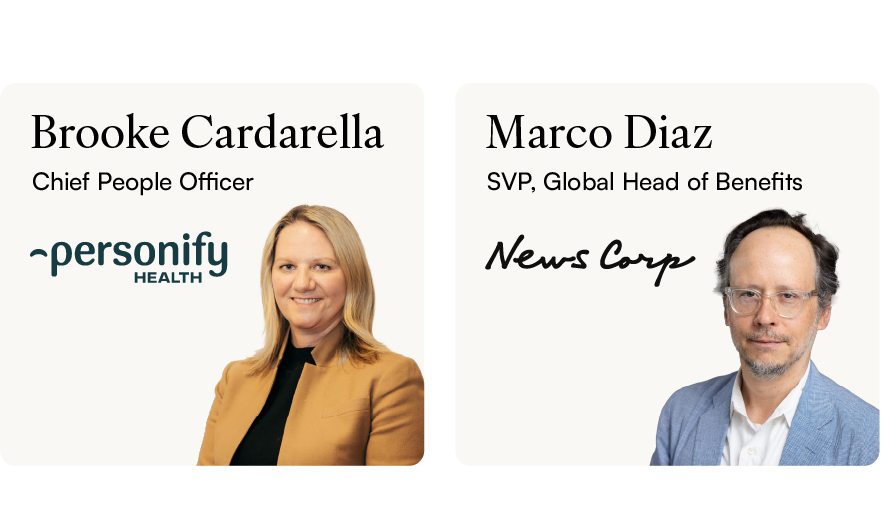
Getting started with AI: practical advice for Benefits & HR leaders
Why attend
Every Benefits and HR leader is being asked the same question right now: what are we doing about AI?
The answers out there are either too hyped or too hypothetical. So we're doing something different.
We're bringing together two HR leaders who've moved past the talking phase and into real deployments, and asking them the questions you actually want answered: How did you pick where to start? How did you sell it to leadership? What did the rollout actually look like, and what would you do differently?
What you'll walk away with
- A framework for choosing a first AI use case
- Clarity on how to build your business case
- Steps for a successful rollout
Who should attend
Benefits, Total Rewards, HR and People leaders exploring or planning AI initiatives, as well as the benefits brokers and consultants supporting them.
.png)
From Chaos to Clarity: How AI is redefining benefits support for Open Enrollment and beyond
Why you should watch
For HR and Total Rewards leaders, benefits are your second-largest expense and one of your biggest employee experience levers. But proving ROI, scaling support, and optimizing spend are harder than ever. This webinar will show you what leading companies are doing right now to transform benefits operations with AI, and where to start your own journey.
Please fill out the form to watch on-demand. Once the form is submitted, you will receive a confirmation email with a link to watch the recording.
Webinar Runtime: 60 minutes
Originally aired: December 4, 2025
Open enrollment season is the most intense time of year for HR and benefits teams, and this time AI transformed the experience for HR and employees alike.
Join to hear how Dene and Sarah are using AI to reinvent benefits support, reducing ticket volume, improve employee understanding, and give HR teams time back for what truly matters: people and strategy.
You’ll also get a behind-the-scenes look at Avante’s analysis of thousands of employee benefits questions, revealing what employees actually struggle to understand and where AI can make the biggest impact.
Key takeaways
- Automation: How AI Handles Routine Questions at Scale
See how benefits leaders are automating repetitive employee questions, slashing ticket volumes while improving employee satisfaction. Learn how this frees HR teams for higher-value interactions and strategic planning. - Workflow Shifts: From Inbox Chaos to an AI Frontline
Hear how one organization eliminated its “benefits inbox” entirely by using an AI assistant as the first line of support, with a ticketing system only for complex, human-sensitive cases. - Personalized Scenario Modeling: Smarter Choices, Happier Employees
Discover how AI is enabling personalized, data-driven scenario modeling, helping employees confidently choose plans that fit their families and budgets. - Insights Never Before Possible: Turning Data into Strategy
Explore how AI is surfacing new layers of insight — from claims patterns and vendor performance to real-time employee sentiment — empowering benefits leaders to make strategic, data-backed decisions.



Case Study
How Samsung’s benefits team became AI-native
Challenge
A benefits program running on disconnected data
Samsung Semiconductor’s benefits team was running a multi-million-dollar program, but their data couldn’t tell them whether it was working the way they intended, or help them shape strategy and make the case for change to leadership. Claims, Rx, dental, vision, point solution, and wellness data all arrived directly from vendors, each source on its own, never reconciled, leaving the team no way to reason across them.
The pressure came to a head at renewal. Samsung’s point solution contracts were all up at once, and the performance guarantees underneath them rested on each vendor’s own anticipated ROI, quantified largely from employee attestations rather than objective data. Sarah Schutzberger, Samsung Semiconductor’s Benefits and Wellness Sr. Manager, who is responsible for the entire program, wanted to stop relying on fragmented information and tie every point solution back to actual claims. At the same time, with the team scaling for growth and employees increasingly expecting AI-grade speed, she wanted to modernize the employee experience too.
“Everything before Ava was fragmented. We relied a lot on the data being provided directly to us from our vendors. Now we’re able to connect the dots between each of our benefits to truly understand the employee impact.”
Sarah Schutzberger
Benefits and HR Operations Sr Manager, Samsung
Solution
Two agents, one connected platform
Samsung Semiconductor deployed Avante’s AI-native benefits intelligence platform. It securely brings together claims and eligibility, point solution data, plan documents, and the vendor contracts behind them into the Vault, and two purpose-built AI agents sit on top of that shared foundation. For most benefits teams, those sources never connect. With Avante, they do.
Ava
Ava, the agent for the benefits team, reasons over all of it, reconciling vendor contracts and reports against the actual claims on demand. It can generate reports and build branded presentations. The team can bring its own data too, uploading spreadsheets, PDFs, and files into a conversation. It acts like an expert benefits teammate that knows the company, its programs, and its goals, and delivers objective, near real-time insights when they’re needed. “I was looking for a data warehouse,” said Sarah, “and this is so much better. Instead of static dashboards or sending requests to an analyst, I have real-time insights at my fingertips on any question I have.”
Screens are illustrative. Names and data shown are fictional to protect user privacy.
Carly
Carly, the agent for employees, gives Samsung’s workforce real-time, accurate answers to benefits questions, and prompts the right next step rather than answering only the literal question. It helps employees find and use benefits they did not even know they had, at the exact moments they need them most.
Screens are illustrative. Names and data shown are fictional to protect user privacy.
Together, the two agents give the entire company a complete picture of its own benefits, making the use cases below possible for the first time.
Results
What the team does with Ava
The use cases are virtually endless, from building reports to making the case for new programs, from developing customized communications to pressure-testing plan redesign decisions. These are just a few the team acted on in its first three months with Ava.
Use case 1: 66% increase in Lyra utilization
Lyra had traction, with strong engagement and a high share of employees in care relative to its book of business. But when the team dug into behavioral health using Ava, they were able to compare utilization across Lyra and the medical plan, the EAP and the carrier, two datasets that almost never get connected. They surfaced a gap they could not have seen before: a large share of dependents, especially children, were routing through the medical plan for behavioral health instead of starting with Lyra, where the team wants people to begin. The stakes are meaningful: care comes in on day one through Lyra, versus waits of two weeks or more through the medical plan.
The team used Ava to draft communications for that exact parent-and-dependent population, timed to Mental Health Awareness Month, and sent them that week. They also took the finding back to Lyra so it could sharpen its own outreach, and opened a conversation with the medical plan provider about surfacing Lyra first inside the portal. The result: from the first communications in May through the end of June, engagement with the dependent population improved and utilization increased 66%.
“It was a ten-minute chat with Ava that gave us key insights, so we could make targeted communications and address the exact gap instead of throwing spaghetti at the wall and sending out marketing materials that weren’t necessarily hitting.”
Cara Ayala, RD, CPT, CHC
Wellness and Benefits, Associate Manager, Samsung
Use case 2: Making the case for healthier food options
As dietitians, Sarah and Cara had wanted to address nutrition through the company café for years, and the project kept getting pushed aside. Working from the claims data, they pulled the disease states most influenced by nutrition, gave Ava their clinical guidance (whole-foods-first, plant-forward, lean proteins, healthy fats, and a simple green/yellow/red system employees could follow), and used Ava to produce an evidence-based meal program.
The café team now plans to use this framework during the current RFP process to ensure the new vendor is able to execute successfully. Additionally, the team will track the changes in their food program along with medical claims to see the impact. A project that had waited years came together in a single 2-hour planning session.
“Revamping our cafe and food options has been a passion project of ours, but it’s a project that gets pushed to the wayside year after year. But with Ava, it is now possible to move forward.”
Cara Ayala, RD, CPT, CHC
Wellness and Benefits, Associate Manager, Samsung
Use case 3: Building an airtight sabbatical program ROI proposal
Hortencia Alcazar, the Senior Benefits Analyst at Samsung Semiconductor, had built a sabbatical analysis by hand about two years ago. It took two to three weeks of research, formatting, and modeling. She rebuilt it this year with Ava, and it came together in a few hours. Ava pulled in turnover, mental health burnout claims, replacement cost, and tenure assumptions to model ROI at different vesting points, then packaged the work as an executive summary and slides ready for leadership. What stuck with Hortencia and the team was that when they tried to trick it with the data, it held its logic and double-checked them, reasoning exactly as they would have. The proposal is now slated for Samsung’s 2027 program.
“I’d classify Ava as a thought partner and an analyzer.”
Hortencia Alcazar
Senior Benefits Analyst, Samsung
Endless possibilities for AI-native teams
In addition to the use cases above, the team:
- Built a custom manager support guide for mental health crises in minutes by combining Samsung’s own mental health crisis-response document with materials from Lyra
- Assessed whether their preventative care solution was reducing cardiovascular disease and diabetes and found low engagement among comorbid members who need it most, driving targeted communications
- Explored redesigning the medical plan for next year, including options such as a migration from the OAP to an HDHP, which will inform future negotiations
- and more…
Results
What Carly does for employees
Before Carly, an employee who wrote to the shared service center could wait more than 48 hours for a reply, and often got an answer to only the exact question they had asked. Carly answers in real time, meeting the employee where they are with personalized guidance. 16% of questions come in after hours, when the benefits team isn’t available, meeting an employee at the exact moment they need support.
It also prompts the right next step. For example, when an employee asks about mental health coverage under the medical plan, Carly also points them to Lyra, the path the team wants people to take first. Every employee question becomes a chance to drive awareness of the benefit they should be using, at the moment they need it. In the last four months alone (February – May), Carly instantly and accurately answered over 1,500 employee questions, saving the benefits team approximately 930 hours.
Open enrollment, when question volume is highest, was a key point in the year to prove Carly’s efficacy and impact. According to Sarah Schutzberger, “It was the smoothest open enrollment we’ve ever had. The amount of time it saved our team was extraordinary.”
“Avante is transforming our employees’ experience, is giving our benefits team time back, and has yielded insights resulting in impactful interventions, which are having a positive impact on the health and wellbeing of our team.”
Kevin O’Connell
Senior Director, Total Rewards & HR Operations, Samsung
Screens are illustrative. Names and data shown are fictional to protect user privacy.
How the work itself changed
With Carly fielding the day-to-day employee questions, the team reclaimed the hours it once lost to repetitive inbox support and redirected them to strategy and program development.
The team spends that reclaimed time with Ava, now its first stop for any question, communication, or decision. They use Ava to answer real-time questions in a standing Friday meeting with leadership and bring it to events to pressure-test ideas on the spot.
Ava gives them more strategic insight, faster, and it’s backed by data they trust. In its first few months, the team reclaimed hundreds of hours using Ava to build leadership and employee-facing deliverables and run dozens of cross-source claims analyses that used to take weeks by hand, or days waiting on vendors. That level of visibility and ownership also changes what gets approved. Walking into leadership with the data and the reasoning behind a recommendation moves more initiatives forward, and gives the team the confidence to put program and plan redesign recommendations on the table.
“It’s easier to push things through leadership when you have the data and the why behind the strategy.”
Sarah Schutzberger
Benefits and HR Operations Sr Manager, Samsung
“I don’t know what I did before Ava.”
Cara Ayala, RD, CPT, CHC
Wellness and Benefits, Associate Manager, Samsung
Look ahead
For Samsung, these are the early innings. On the roadmap: bringing their own drug-utilization data to PBM negotiations; connecting LOA, short-term disability, Lyra, and medical claims to forecast and prevent leaves; and next year’s medical plan design.
Benefits clarity for employees and HR
Samsung Semiconductor runs a generous benefits program, including several point solutions, focused on emotional, social, financial, and physical health and wellness for their employees and dependents.
“If you don’t have AI on your benefits team, you’re already behind. Especially in our industry, our employees are so used to using AI in everything they do, from coding to drafting. It’s everywhere. If we don’t have it, how can we stay aligned with the technology and the experience they’re already used to?”
Case Study
Swoop + Avante: a lean benefits function, now always on
Challenge
A modern benefits experience for an AI-forward workforce
Swoop is an AI-forward technology company, and it wanted its benefits experience to match the standard its people expect from the tools they use every day. Swoop was on a PEO, and benefits questions either routed to the PEO portal, where the team had no visibility into the questions being asked, or landed with the one person on the front line for benefits: Tammy Winsett, Swoop’s payroll and benefits manager, who could only get to them so fast.
Now, Swoop was moving off the PEO, and its advisors at OneDigital knew the lean HR team might need extra support through and after the transition, as the volume of questions coming to HR would increase significantly.
Meanwhile, Swoop’s employees are the type to solve things themselves. An Engineering leader took it upon himself to build an AI assistant on Swoop’s internal AI tool to review and compare medical plan documents, a clear signal of demand. But a general-purpose tool isn’t a safe or reliable source of truth for benefits, and building and maintaining one shouldn’t fall to employees.
What Swoop wanted was a purpose-built benefits assistant it controlled: accurate, current, and available whenever employees needed it.
“I try to respond within twenty-four hours, but if they’re sending after hours or on weekends, they’re waiting a little bit longer.”
Tammy Winsett
Payroll & Benefits Manager, Swoop
Solution
A benefits-specific source of truth the team controls
OneDigital brought in Carly, an AI benefits agent for employees, and fed it with Swoop’s own plan documents. Carly is purpose-built to read complex health plans, charts, and exceptions with patent-pending document-parsing technology, so critical details aren’t missed or misrepresented. It can also rationalize the entire plan, so when someone asks a specific question about one benefit, it knows to bring up all the relevant information at once.
On the HR side, Ava, Avante’s AI benefits agent for HR teams, lets the team mine and analyze question data for insight. That surfaces signals into what’s working, what’s confusing, and what’s missing, something that was previously impossible at scale.
Results
Employees got answers, and the team focused on strategy
Impact on employees
Carly meets employees when they actually make benefits decisions. 35% of questions came in after hours and on weekends, when the Swoop HR team would otherwise be offline.
Impact on the benefits team
In eight months, Carly answered 622 questions across 227 conversations, reached nearly one in five employees (and climbing). When an acquisition added roughly 200 employees, monthly question volume jumped 8x and Carly absorbed it with no added headcount.
The question data also reshaped an important vendor decision. The team had been considering replacing its wellness point solution, so OneDigital asked Ava to dig into what employees were actually asking about it. The signal was telling. “The data helped confirm that it’s really just noise,” Lauren says. “The questions were about how to access the solution, not complaints. It allowed us to take making a change off the table until next year.”
Look ahead
Swoop plans to use question data to sharpen communications and spot plan gaps. Tammy and OneDigital will fold Ava’s question insights into 2027 planning. “I’d be interested in seeing that data as I start preparing for open enrollment,” said Tammy, “so I can see how we need to change our communications.”
Competitive benefits for a fast-growing tech workforce
Swoop is a market leader in AI-driven, data-powered, and privacy-compliant healthcare engagement comprised of almost 500 employees across the US and Canada. For a company competing for technical talent, benefits are a competitive advantage. “We pride ourselves in providing a positive experience to our employees and being competitive with what we can offer them,” says VP of Human Resources Lauren Buczkiewicz. “Our goal is to make benefits something employees don’t have to stress about. As much as we can limit the noise, that’s our goal.”
“I find people are often making these decisions outside of their working hours, It gives them the flexibility to sit and think. You’re not juggling a call, you can talk to a family member about it. Having that flexibility is huge.”
Case Study
How Personify Health made benefits AI real
Challenge
Half their benefits questions arrived when no one was working
Benefits questions never stop — not after open enrollment, and not even at off-hours. It’s a struggle every HR team faces, and Personify was no exception. Nearly half of their employee benefits questions came in during evenings and weekends. That’s exactly when people sit down and think about their coverage, and exactly when the team is off the clock.
Solution
Start with one use case, expand as trust increases
Personify integrated Carly in the benefits inbox during open enrollment, when questions pile up fastest, where it auto-drafted responses that Benefits managers could review and send. Topics spanned benefits, payroll, leave and more. In January they gave every employee direct access via web app and Teams, and it has run year-round since. Later they brought their medical and pharmacy claims data into Ava, so the team could track utilization, analyze vendor ROI, and build a higher-impact program.
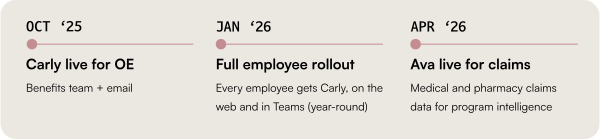
Results
Employees got answers; team got its time back
Impact on employees
Employees asked Carly 2,172 questions directly, on the web and in Teams, and many of them came after hours, when the team was offline. Instead of waiting for the next business day, they got clear answers in the moment a benefits decisions actually gets made. “Carly’s response, 10 out of 10 times, is way better than mine,” says Brooke Cardarella, Chief People Officer at Personify Health.
Impact on the HR team
Carly answered 4,632 benefits questions in all: the 2,172 employees asked directly, and 2,460 more that came into the benefits inbox, where Carly drafted the reply for the team to review and send. That saved an estimated 812 hours. And with Ava analyzing medical and pharmacy claims, the team now knows what’s working in real-time, instead of waiting for an annual report. “Data that I’ve not had,” says Brooke, “and we can use that for steerage in a way that I’ve never been able to do in the past.”
An AI benefits expert for employees and real-time intelligence for leaders
Personify Health helps other companies run better health programs — and holds its own benefits experience to the same bar. They brought Avante in to answer employee benefits questions instantly and show the HR team what employees actually need.
"Get on it. It’s easier than you think."
Case Study
How Real Chemistry transformed benefits for its fast-growing workforce
Challenge
Benefits literacy and scale in a fast-growing workforce
When Real Chemistry’s CEO challenged every function to find a meaningful way to advance the business with AI, VP of Global Total Rewards Olga Reupert saw benefits as a natural place to start.
Real Chemistry has a globally distributed workforce with limited benefits literacy. Many employees didn’t know what a PPO was, and often defaulted to the lowest-cost plan rather than the plan best suited to their needs. At the same time, headcount was growing through both organic hiring and acquisitions, pulling the Benefits team into repetitive Tier 1 questions and away from higher-impact strategic work.
“Our CEO asked us all to think about AI in our daily work and how we can leverage it to advance our business, to scale, and to help people. I thought, where can I start to make a contribution that would be meaningful to the business? The answer was benefits.”

Olga Reupert
VP of Global Total Rewards, Real Chemistry
Solution
Purpose-built benefits intelligence, rolled out on Real Chemistry’s terms
Real Chemistry deployed Carly, Avante’s AI benefits agent for employees, to give its workforce 24/7 access to reliable, personalized benefits guidance.
Rather than launch cold during open enrollment, Olga built a phased rollout that began in February: Benefits team first, then HR Ops, then People Business Partners, then new hires. She wanted to make sure they built trust and drove adoption along the way, so that by the time open enrollment hit, every employee already knew their new AI coworker and was ready to roll.
Built for trust
Data privacy was non-negotiable. For Real Chemistry’s deployment, Avante used only the minimum demographic context needed to personalize guidance, while remaining fully HIPAA compliant for any health information shared in conversation. After a rigorous review, Real Chemistry’s security team signed off.
Results
Employees got answers, and HR got their time back
Impact on employees
For a workforce that often defaults to the cheapest plan, Carly changed what was possible. One new hire asked Carly 44 questions in a single session, starting with “What is a PPO?” and walking through plan-by-plan comparisons before enrolling in the Kaiser plan that best fit their situation. “That was way more time than we would have ever been able to spend or give to an employee,” says Olga.
Nearly 30% of questions came in on weekends and after business hours, revealing when employees actually make benefits decisions: at home, often with a spouse, while reviewing household budgets. With Carly available 24/7, those decisions no longer had to wait for the next business day. The point for Olga isn’t the volume; it’s the timing: “This is meeting people when they really need our help.”
Impact on the Benefits team
Open enrollment was the strategy’s biggest test. “It was crazy. By the time open enrollment came, I could not believe that our team would wake up on Monday and their inbox was not flooded with questions,” Olga reflected.
From February 2025 through April 2026, Carly answered more than 8,500 benefits questions, reclaiming 6,000 hours for Real Chemistry’s Benefits team. That scale has freed the team to shift from reactive service to proactive strategy, even as the company has grown through acquisitions and new hiring, all without adding Benefits headcount.
Carly also gave Real Chemistry something it had never had before: visibility into which benefits are most in demand, where employees are confused, and how well communications are landing. The team now uses those insights to sharpen communications, close knowledge gaps, and shape strategic planning.
Look ahead
For Olga, Carly is the start of a bigger reimagining of what benefits can be when AI is woven into how the team works.
Giving employees personalized benefits guidance at scale
Real Chemistry is a global health innovation company with more than 2,000 employees, applying real-world data, AI, and human insight to advance healthcare outcomes. The organization serves the world’s leading life sciences companies and is equally committed to the employee experience inside the company.
Case Study
How SurveyMonkey transformed open enrollment
Challenge
Scaling personalized guidance during open enrollment
SurveyMonkey’s 2025 open enrollment reflected a common benefits consideration: how to deliver meaningful, personalized guidance to employees at scale. OneDigital, their broker, recommended AI. But the benefits team wanted to ensure any new technology added clear value without increasing complexity. Rather than adding another interface, they looked for a solution that would empower employees. Avante stood out because it was purpose-built for benefits; by using the most up-to-date data, it transforms a fragmented support experience into a streamlined, one-stop comparison solution.
“Our support model was intentionally high-touch, and as we scaled, we saw opportunities to enhance speed and accessibility. Our goal was to automate the routine and streamline the complex—replacing manual ticket queues with a system that delivers immediate answers directly into employees’ hands.”

Camila Menendez Santos
Global Benefits Manager, SurveyMonkey
Solution
Purpose-built benefits intelligence
SurveyMonkey deployed Carly, Avante’s AI agent with instant access to the company’s complete benefits documentation, plan details, and enrollment data. Available 24/7, Carly could answer basic questions like “What is critical illness insurance?” or run complex scenarios comparing multiple plans based on family situation and expected healthcare needs.
The deployment served two audiences: employees seeking benefits guidance and the HR operations team handling escalations. While Carly remains available year-round, the initial focus was the high-stakes open enrollment period.
Results
Benefits transformation during the two-weeks of open enrollment
(October 27 – November 7, 2025)
Impact on the benefits team
“Carly enabled me to quickly validate and share accurate responses with employees,” says Menendez Santos. “As a result, I was able to dedicate more time to complex, high impact cases.”
The impact extended beyond the core benefits team. SurveyMonkey’s HR operations team used Carly to answer questions instead of escalating them. “When they received tickets related to open enrollment, they could just take those questions, put them in Carly, and use that as the answer,” notes Lauren Clark, Director of HR Business Partners & Total Rewards.
Impact on employees
“Carly helped create a more elevated and personalized benefits enrollment experience,” Clark says. “Avante provided employees with a confidential space to understand and explore benefit options. Ultimately this allowed them to make decisions that feel right for them and also reduced the need for individualized conversations with the Benefits team.” 21% of questions came after hours, revealing when employees make benefits decisions: at home, often with a spouse, while reviewing household budgets. With Carly available 24/7, these decisions didn’t have to wait for the next business day.
One finding surprised the team: over half of questions about hospital, family, critical illness, and accident insurance were purely definitional. Employees weren’t asking about specific plan details; they were asking, “What is this?”
“I was surprised by how many ‘what is this’ questions we got,” Menendez Santos reflects. “Typically the question is ‘Will this cover X?’ But seeing that folks didn’t have that foundational understanding was eye-opening.”
The data also pointed to strong interest in HSA optimization, cost-and-coverage considerations, and new benefit offerings. “As we shape our 2026 benefits education roadmap, this insight helps us prioritize the topics that matter most and tailor education to the right depth,” says Menendez Santos.
Giving employees personalized benefits guidance at scale
SurveyMonkey is a survey and forms platform with approximately 1,000 employees across offices in the U.S., UK, Canada, Ireland, the Netherlands, Italy, India, and Costa Rica. The company serves millions of customers globally who use its platform for customer experience, employee engagement, and market research.

Case Study
OneDigital scales service excellence with AI-powered benefits support
Challenge
Scaling service excellence through rapid growth
As OneDigital expanded rapidly, adding thousands of employees each year, the Corporate Benefits team faced surging inquiries. During open enrollment and other peak times, hundreds of emails and calls poured in monthly, threatening to slow responses and erode satisfaction. Without adding headcount, the team needed a way to:
- Reduce time spent on routine questions
- Provide 24/7, accurate answers
- Free specialists to focus on complex, high-value support
Solution
AI-powered benefits support, embedded in daily workflows
To meet this challenge, OneDigital implemented Avante’s AI-native benefits platform. Avante interprets employee questions and delivers policy-aligned responses using OneDigital’s plan details, HR policies, and FAQs, seamlessly integrated into the tools employees already use. Key features include:
- High tech + high touch: OneDigital introduced Avante’s trusted AI concierge, Carly, as part of their support model, bringing a consistent, approachable experience that reinforced their culture of caring.
- Always-on self-service: Carly provides instant AI-generated answers via a web app, cutting inbound email volume and providing support outside business hours.
- Embedded access: A Workday tile and Teams integration make answers available in employees’ daily workflows. A direct Workday API ensures personalized responses.
- AI-drafted emails: In Outlook, Avante drafts accurate replies for specialists to review and send, accelerating turnaround times.
- Smart escalation: Complex cases requiring extra empathy or expertise are routed directly to benefits specialists.
Results
Faster answers, freed capacity, stronger employee experience
In just six months, OneDigital achieved measurable results:
Look ahead
Future-ready HR, without losing the human touch
By partnering with Avante, OneDigital transformed benefits operations in under six months, reducing repetitive work, improving employee experience, and preserving its high-touch service model during a period of rapid growth.
The measurable efficiencies and stronger employee experience have positioned OneDigital to extend AI-assisted support into other HR functions, ensuring their culture of caring continues to scale alongside their business.
A culture of caring backed by robust benefits
OneDigital, a leading insurance brokerage, financial services, and workforce consulting firm, employs more than 5,000 people across the U.S. Known for its “fierce culture of caring,” OneDigital promises employees a workplace where they can thrive both professionally and personally.
Central to this promise is a robust wellbeing benefits program, administered by a Corporate Benefits team renowned for its high-touch service. Specialists routinely provide personalized support on everything from plan navigation to dependent enrollment, earning consistent praise for their responsiveness and care.
